
Brightly Shining: Diwali reminds us to be a light to darkness
As the leaves turn, thousands of families in the western suburbs celebrate a five-day festival every fall. Diwali, the festival of lights, may encompass diverse traditions and customs by celebrants, but there are a few common themes.
Curious about this festival? Read on for some answers to some common questions about this holiday.
What is Diwali?
Diwali is a major Hindu festival celebrated by millions of people around the world. It is one of the most significant and widely observed festivals in India and various other countries where Hindu communities reside.
The festival of Diwali has multiple cultural, religious, and spiritual meanings, but the most common significance is the triumph of light over darkness, good over evil, and the human ability to overcome.
It is the celebration of the affirmation that light shines in the darkness and the darkness has not overcome the light. It has been celebrated over 2,500 years by more than a billion people across faiths.
“ The kids get the best of both worlds!”
-Dr. Monica Patadia on keeping her family’s outdoor lights for
Diwali up through the Christmas season
What does the word Diwali mean?
Diwali comes from the Sanskrit word Deepavali, which literally means ‘row of lights.’
Does the festival fall on the same day every year?
Diwali is celebrated over a period of five days, usually in October or November, based on the Hindu lunar calendar. The celebration peaks on the third day with the principal celebration of Diwali (Sunday, November 12 this year).
Why is it called the Festival of Lights?
One of the most iconic aspects of Diwali is the illumination of homes and public spaces with oil lamps, candles, electric lights, and decorative lanterns. The lighting signifies the victory of light and knowledge, symbolizing the removal of darkness and ignorance from our lives.
Fireworks are also a common part of Diwali celebrations, adding to the festive atmosphere. People burst crackers, light fireworks, and celebrate with joy and enthusiasm.
What is the religious significance?
Diwali has different religious significance in various parts of India. In some regions, it marks the return of Lord Rama, an avatar of the god Vishnu, to his kingdom after defeating the demon king Ravana. In other regions, it celebrates the victory of Lord Krishna over the demon Narakasura.
Diwali is also associated with the worship of Goddess Lakshmi, the Hindu goddess of wealth and prosperity. People clean and decorate their homes to welcome her blessings, and it is believed that she visits and blesses clean and well-lit households.
Are there any events to celebrate the culture in the western suburbs?
Hamara Parivar was formed in 2015 by friends from the western suburbs of Chicago who all have young children. As children, they grew up going to garbas and learning about the culture from their parents.
As parents today, they now aspire to share similar experiences they had as young children. The 9th Annual Garba & Raas will occur at The Community House in Hinsdale on Saturday, October 14. Visit https://hamaraparivar2015.wixsite.com/ourfamily for more information.
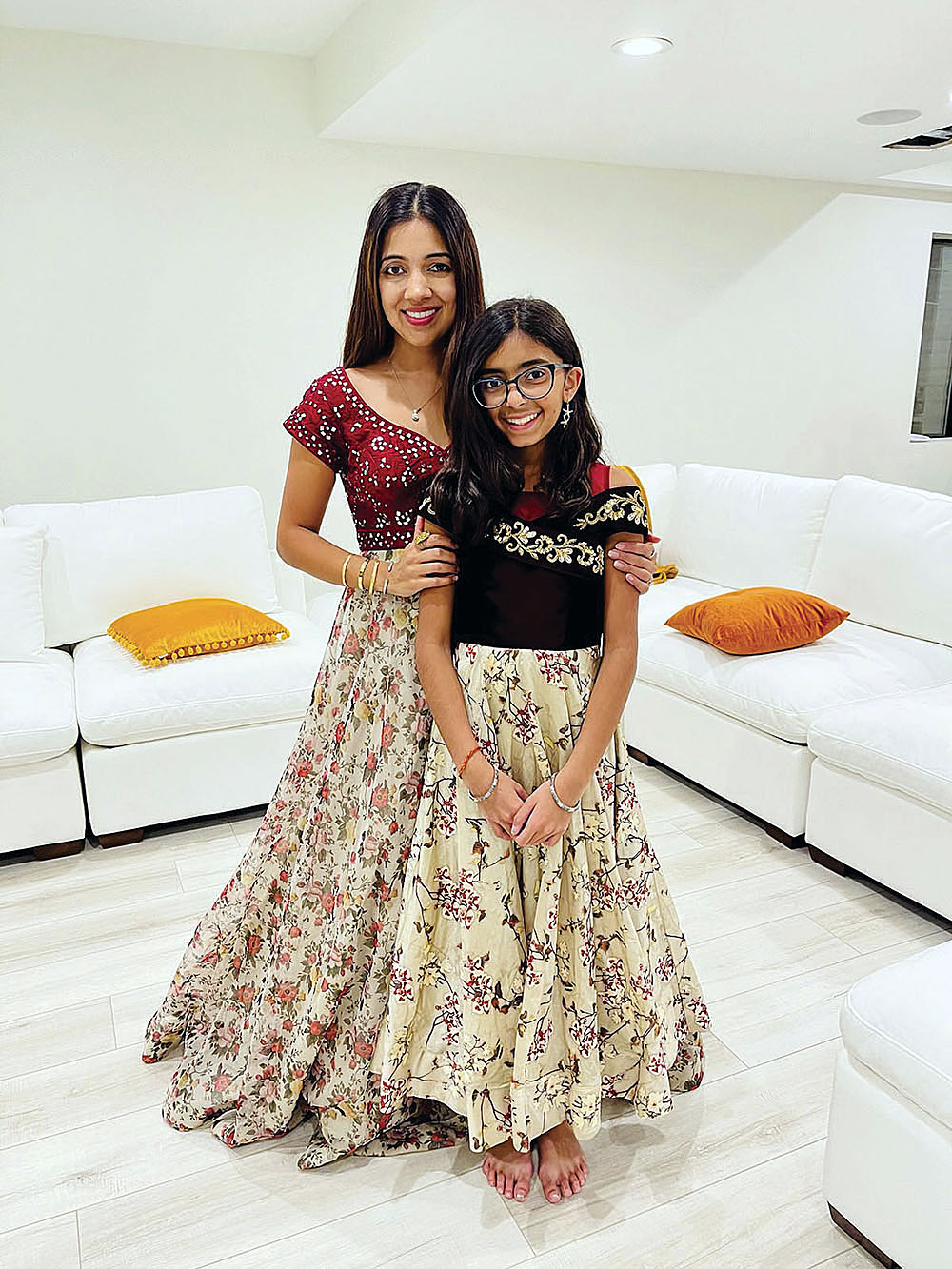
Dr. Monica Patadia and her daughter Reyna at a family Diwali celebration
LOCAL TRADITIONS
Dr. Monica Patadia of Burr Ridge shares her family’s traditions during the festival of lights.
• The Patadia family celebrates with a lot of light. We usually hang outdoor lights for Diwali and then keep the lights up to celebrate Christmas as well. The kids get the best of both worlds!
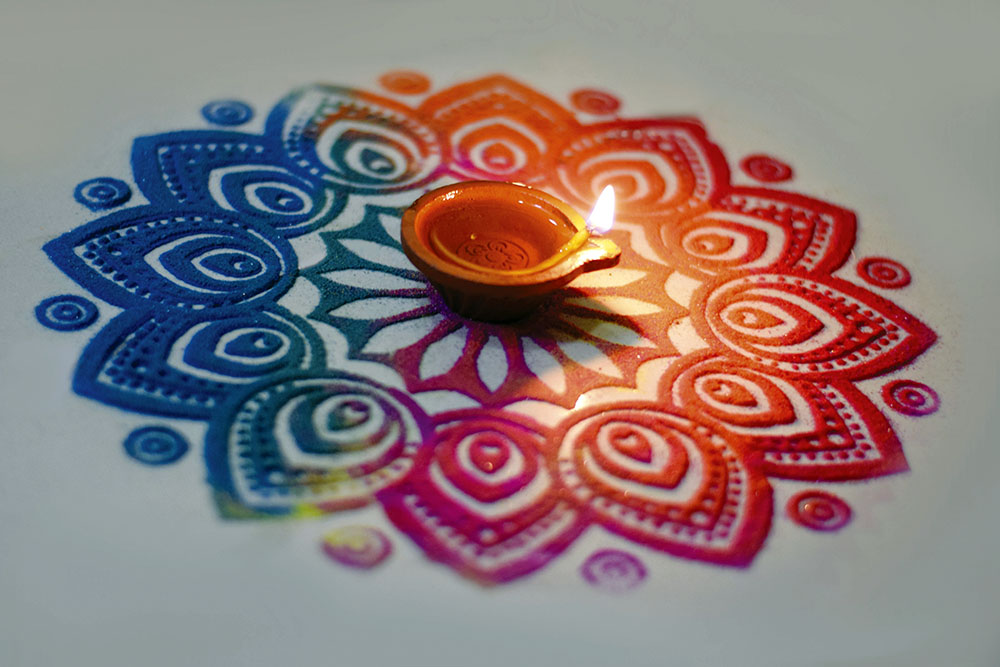
• We decorate the inside of our home with colorful lights known as clay diyas, which are lit during prayers, rituals, and ceremonies. These lights are often permanent in houses and temples. The glow of a diya light represents knowledge, enlightenment, wisdom, and prosperity. Many homes light 13 such lights, as this is the number of diyas that must be lit for good health and prosperity. It is also believed that the 13 diyas protect against negative energies and bad spirits.
• Rangoli, uncooked, powdered rice, is also part of our festive décor. It is a type of art popular in India that is often drawn on the ground or sidewalk in front of the home. The symmetry of the designs symbolizes prosperity, growth, and luck. The purpose of Rangoli is to welcome and attract Hindu gods to the household. Rangoli also purifies the atmosphere around a home and summons a particular deity.
• We perform a religious prayer known as a Puja, which usually consists of making an offering of light, flowers, water, or food to an image of a god.
• We also wear traditional West Indian clothing and get together with family and friends with plentiful food and desserts.

The Patadia children light candles in their home in celebration of Diwali.