
First Audience
How music begins at home and grows into a lifelong passion
The Living Room Debut
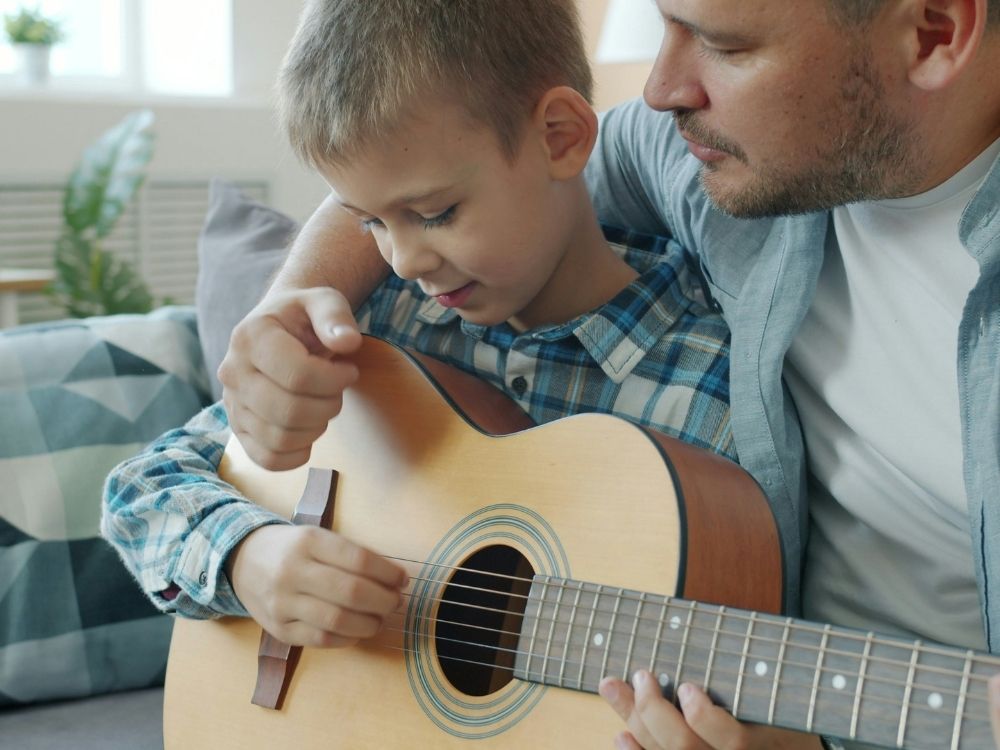
Before there are stages, spotlights, or packed auditoriums, there is almost always a living room. Or a kitchen. Or the back seat of a car. For many performers, the first audience is family—people close enough to hear every missed note and kind enough to applaud anyway. These early performances feel universal: impromptu concerts after dinner, bedroom dress rehearsals, songs sung simply because silence felt too quiet. What makes these moments possible is safety—the feeling that, no matter how rough the performance, the audience isn’t going anywhere.
Larry Collins’s memories capture this perfectly. Growing up, music wasn’t something reserved for special occasions; it was part of daily life. “Along the way, those of us who were old enough, sang every song my father knew,” Collins recalls of long car rides from their home in to the Hospital as siblings were born. “One by one, the songs flew as we drove to and from the hospital.” Those hours of singing—“10 plus hours of singing for each baby born”—were informal rehearsals that planted something lasting.
What Home Performances Teach Us
Performing at home builds confidence gently. The stakes are low, but the lessons are real. You learn how it feels to be heard. You learn how to recover after a mistake. You learn to take feedback—both the warm encouragement of parents and the blunt honesty of siblings, who can be surprisingly tough critics.
Most importantly, home performances offer freedom: freedom to fail, laugh, and try again. That freedom transforms performance from something intimidating into something joyful. Over time, it nurtures a relationship with music that isn’t based on perfection, but on participation.
The Transition Out
Eventually, many performers feel ready to step beyond the living room. That readiness doesn’t arrive all at once; it builds quietly. If I can do this here, maybe I can do it elsewhere. The confidence formed at home becomes the foundation for school stages, community performances, and public events.
For Collins, early family sing-alongs grew into a lifelong connection to music. Today, he sings in Lombard, a western suburb of Chicago — with Acappellago, a vocal group that performs formal concerts as well as national anthems at sporting events. What once began as car-ride harmonies has evolved into polished performances before large audiences, yet the roots remain the same.
Creating That Safe Space for Others
For parents and families, being a first audience isn’t about pushing for excellence or demanding polish. It’s about listening, encouraging, and making room for creativity without judgment. Collins reflects that “we’ve all retained our love of music by either performing or attending musical events whenever we’re able,” a legacy he credits to his father leading them in song.
That legacy continues. “My own three children, now long since grown with families of their own, still pursue the arts,” Collins says. And for performers at any stage, the need for a safe space never disappears. Even now, many still rehearse at home—quietly, imperfectly—before stepping into the spotlight. Because no matter how far the journey goes, it almost always begins at home.
About the Authors:

Laura Michaud

Melissa G. Wilson
About the authors: Laura Michaud is a founding member of the EncoreCenter for Performing Arts and Stage 773. Melissa G. Wilson is a performing arts enthusiast, author, and renowned networker. For more information visit EncoreCenterforPerformingArts.org