
Hearing a Child’s Voice: Wood Dale school helps deaf children find their voices
By Maureen Callahan
Hearing a child’s first word is something a parent never forgets. For parents of students at Child’s Voice in west suburban Wood Dale, it’s a huge reason to celebrate.
All students at this school are stricken with varying degrees of hearing loss. Some are completely deaf.
Guided by a competent and compassionate staff, these students strive daily to overcome a lack of one of their most crucial senses.
Child’s Voice was founded in the mid-90s by six Chicagoland families of children with hearing loss. Previously, the group had traveled to St Louis for deaf educational services.
They wanted their children to have the same opportunities as their hearing classmates. The families combined their efforts to start this school as a local educational option with one of the therapists from St Louis.
The school’s first location was in a classroom at Mary Queen of Heaven School in Elmhurst in 1996. The space was very quickly outgrown. The new school- Child’s Voice’s current location- opened in 2002.
Several families commute a long distance- sometimes driving in for the week and returning home on weekends- for the benefits offered by a Child’s Voice education. The very first teacher is still on staff, and the first child graduated in 1998.
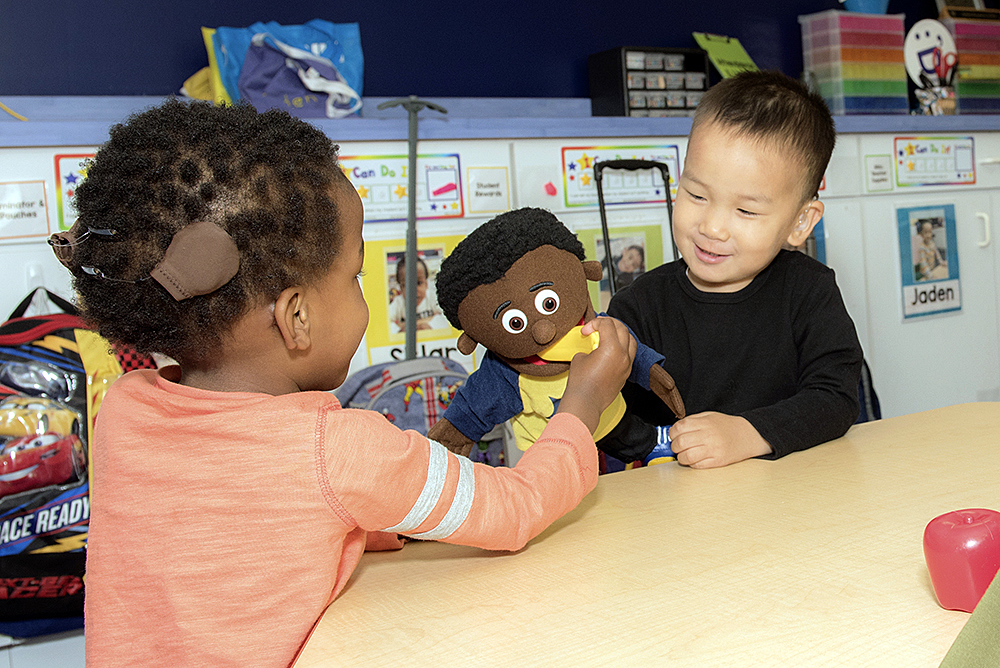
To enter the school is to find a traditional center for learning committed to changing the lives of kids with hearing loss. Bright, airy classrooms with state-of-the-art furniture and equipment are all geared toward closing the educational gap created by hearing loss. The goal is to get each child through the program and ready to enter their local school.
Everything at Child’s Voice is about getting kids to listen and speak. In the past, sign language was the primary way the deaf communicated with the outside world. While signing is still a method of communication used by some families within this school community- particularly those with deaf parents- it is not part of the school program.
The objective is clearly to have the students listening and talking as soon as possible. “Unfortunately, the world doesn’t come with closed-captioning,” said Kate Bousum, the school’s Director of Advancement.
The experience of living with hearing loss has come a long way. Early intervention has become much more prevalent with mandated hearing tests for newborns in the hospital in the state of Illinois.
The sooner a child is diagnosed with hearing loss, the earlier they can be outfitted with a hearing device. All data indicates that the child’s chances of achieving a positive academic outcome usually follows.
While some students wear hearing aids, which only amplify sound, most have cochlear implants. This more sophisticated sound processor captures sound signals and sends them to a receiver implanted under the skin behind the ear. The receiver sends the signals to electrodes implanted in the inner ear.
An onsite, soundproof audiology laboratory -the same quality as that found at Lurie Children’s Hospital- can detect the degree of hearing loss in a baby as young as six weeks old.
The sooner a child is outfitted with a hearing device, the greater the outcome. Devices must be tested throughout life and need frequent adjustment. Current students and alumni alike have lifetime access to the school audiology lab.
Classroom activities and playthings seem typical to any school, but everything here is about brain development. Babies aren’t born knowing how to talk. People with normal hearing spend the first year of their lives learning how to talk.
When there’s hearing loss, that time is extended. “Hearing isn’t like vision,” said Bousum. “It’s not a light switch. The brain must hear and understand the language before it can turn it into speech.”
Child’s Voice is set up as two entities- an early intervention program, for children from birth to 3 years old, followed by a school-age program for students aged 3 to 8 years old.
Early intervention outreach happens in the home until a child is a year-and-a-half old, at which point they are eligible to attend the Wood Dale campus.
A satellite site in Roscoe Village hosts the same services for families closer to the city. Currently, about 70 zip codes are served through the combination of the two programs.
The goals are to offer help, hope, and support to both the child and their family before they are of age to attend the school.
Weekly visits by therapists help empower parents to make language a part of their child’s day and be sure they’re comfortable with the tools they need to teach their kids.
The school-age program at the Wood Dale campus is available to students ages 3 to 8 years old. Like any other school, classes are set up as preschool through second grade.
Students are grouped into cohorts based on their grade level, ability, and command of language. Every 30 minutes, an aide works with a group of 2 or 3 kids at a time, geared toward tactics and strategies for each individual child, before returning them to the larger group.
Academics are on par with national standards, with a strong focus on early language, ABCs, and mathematics. Students also have technology instruction. “The goal is for Child’s Voice kids to be almost over-prepared academically, as they will eventually be dealing with the social and emotional changes of joining a mainstream classroom,” said Bousum.
Self-advocacy and teaching children not to be afraid to speak up for themselves or ask someone to repeat something are stressed daily.
Most students transition to their neighborhood schools around kindergarten, with a handful staying through the first or second-grade level. Each spring, a graduation ceremony sees Child’s Voice graduates ready to transition to their neighborhood schools. Every child uses their acquired skills to speak at commencement.
But it’s never really goodbye, as the students know they are always welcome back for hearing device adjustments or other resources, such as support in their transition to mainstreaming to their local schools. The alumni network is tight-knit and holds periodic meet-ups.
Hearing loss, while still an obstacle to overcome, is not the insurmountable hurdle it once was, thanks to programs like this one. Helen Keller once said she felt “the deaf are the loneliest people in the world.”
Child’s Voice works daily to close the gap brought by hearing loss and give its students the same opportunities available to their hearing counterparts.
For more information, please visit Child’s Voice website at:
childsvoice.org ■
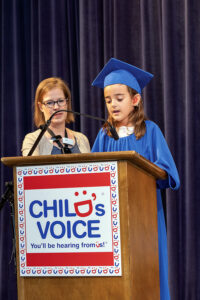
Each child speaks at graduation-a milestone in itself.
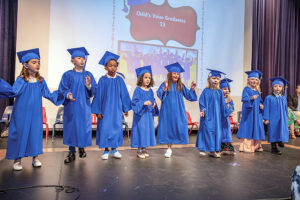
Graduation marks the bittersweet transition of students to their local schools.
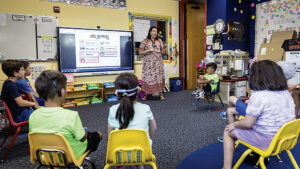
State-of-the-art classroom settings and equipment make learning fun.
(Photograph by Charles Cherney)
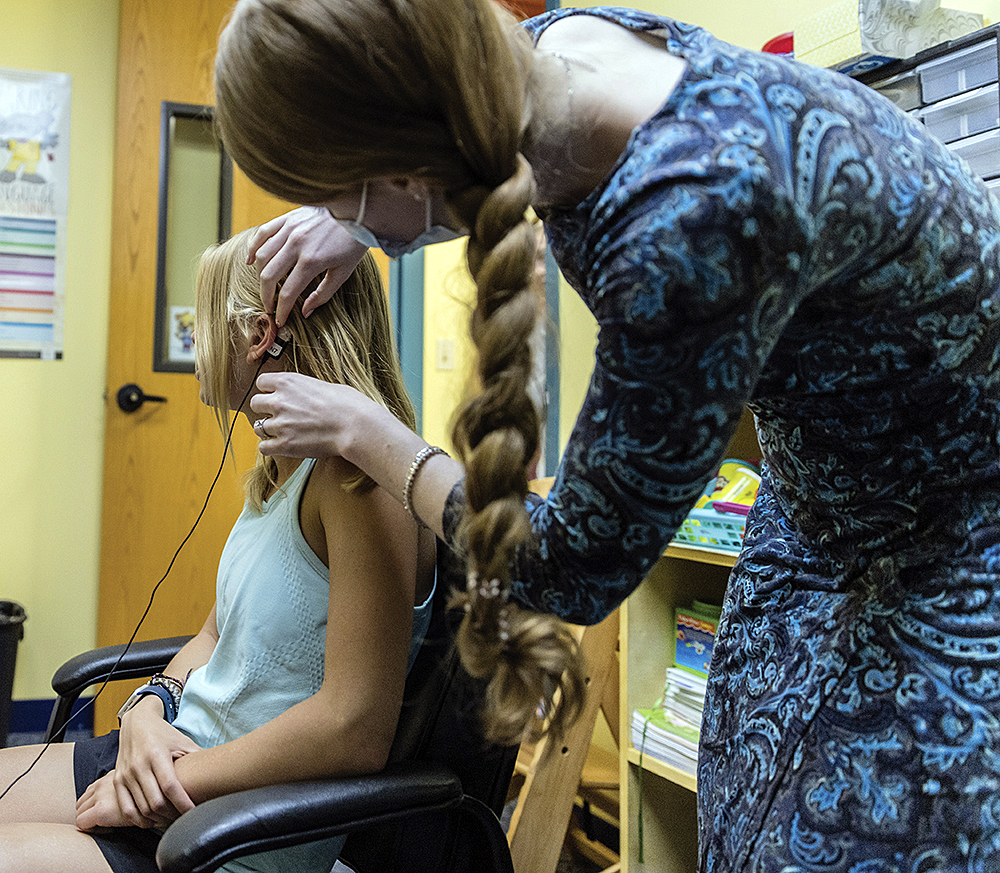
Alumni have lifetime access to hearing device adjustments.
(Photograph by Charles Cherney)