
Lombard’s Lilac Legacy
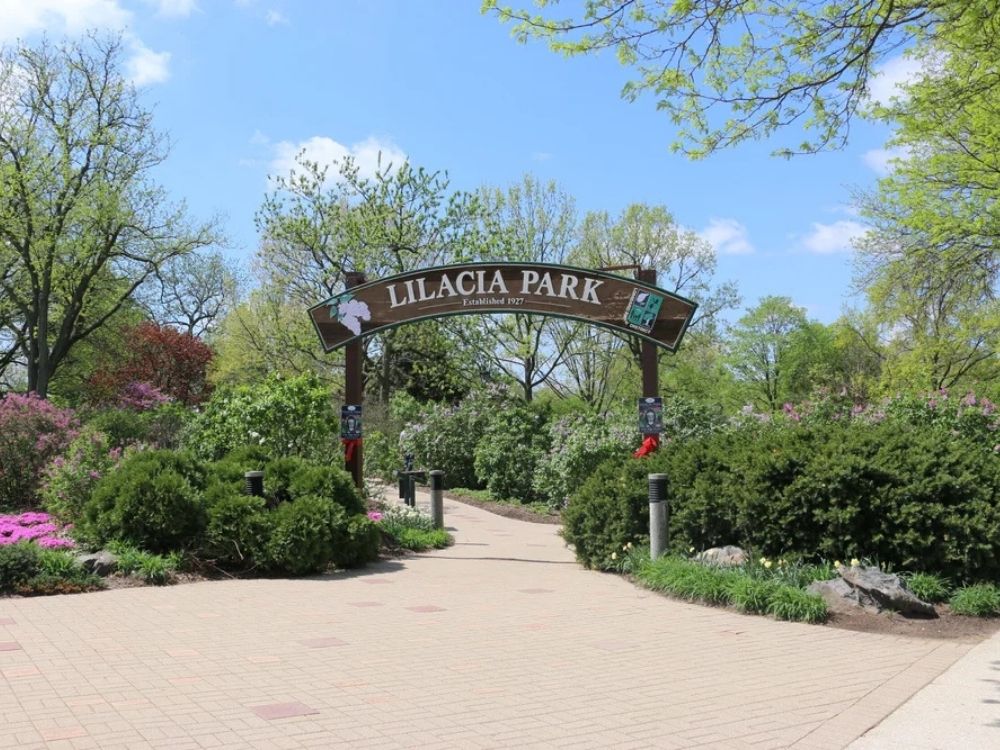
The history and heritage of Lilacia Park
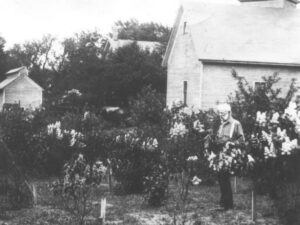
Photo courtesy of the Lombard Historical Society
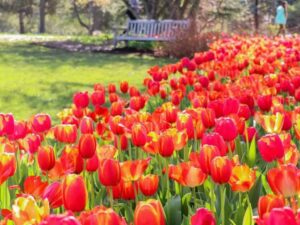
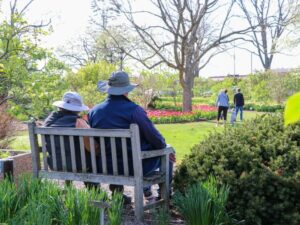
For over a century, lilacs have been synonymous with Lombard. Each spring, countless lilacs, tulips, and more bloom across the historic 8.5-acre Lilacia Park.
Lilacs have a long and well-traveled history, dating back to their origin in Asia Minor. Syringia vulgaris (the lilac or common lilac) was long-admired by locals before being introduced to Western Europe in the 16th century. Cultivated in Vienna, lilacs spread across France and eventually to North America.
Lombard’s famed lilac heritage traces back to Col. William Plum and his wife, Helen Maria Williams Plum. Born in Massillon, Ohio, in 1845, Col. Plum served in the Civil War as a master telegrapher before enrolling at Yale Law School in 1865. He married Helen two years later.
In 1869, Plum moved west with hopes of pursuing a law career in Chicago. After a short stay in the city, he discovered the small village of Lombard, then known as Babcock’s Grove. There, he purchased property at the corner of Park and Maple — an estate that would later become known as Lilacia.
The couple’s passion for lilacs blossomed during their travels in Europe, where they toured the famous gardens of Victor Lemoine, a prolific flower breeder whose work contributed to modern lilac varieties, in Nancy, France.
After touring, the Plums purchased two lilacs: Syringa vulgaris ‘Mme Casimir Périer,’ a double white, and Syringa vulgaris ‘Michel Buchner,’ a double lilac color. These would become the foundation of Lilacia’s blooms. Over the next 20 years, the Plums traveled the world, increasing their lilac collection to over 200 varieties and roughly 1,200 lilac bushes.
After his wife’s passing in 1924, Plum offered the collection for sale to Joy Morton. Morton told him that the collection should remain in Lombard, not at Thornhill Farm, now known as the Morton Arboretum.
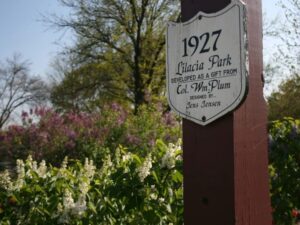 Colonel Plum died three years after his wife in April of 1927. His will stated that the land be given to the people of Lombard as a public park and, in memory of his wife, that their house be given as a “free public library and reading rooms.”
That September, Lombard residents voted to accept these conditions, and the Lombard Park District was born. The famous landscape architect Jens Jensen was commissioned by the park district to design what was called the Lombard Community Garden, now known as Lilacia Park.
Visitors now enjoy the park year-round, but its most popular season is “Lilac Time,” typically arriving in early May. Lilac Time celebrations began in 1930 to officially open Lilacia Park. Early festivities included grand pageants with several hundred participants, Lilac Princesses, and a Queen. In 2019, Lilacia Park was added to the National Register of Historic Places in recognition of its historical and cultural significance.
For historical tours, visit lombardhistory.org. For more information on Lilacia Park or to track the “Bloom-o-meter,” visit lombardlilactime.com. Hinsdale Magazine Group appreciates the Lombard Park District and Lombard Historical Society for their contributions to this story.