

A Page Out of History: Downers Grove’s Baseball History
BY MAUREEN CALLAHAN I PHOTOS COURTESY OF DOWNERS GROVE MUSEUM
Baseball. It’s the American game. Not only is it the country’s earliest seriously organized sport (there were cricket leagues before it), but, as Civil War and baseball historian Bruce Allardice points out, the game helped heal a fractured country after a war.
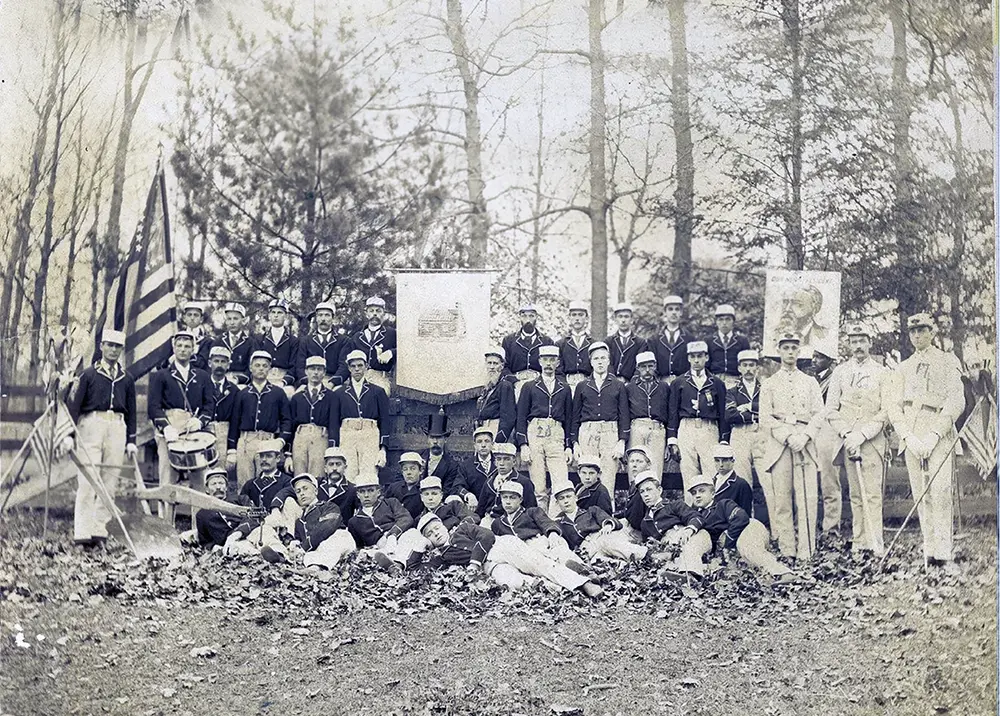
The Downers Grove Plow Boys, a political organization that enlisted in the Civil War, also had the first baseball team.
Who were the Downers Grove Plow Boys?
The Plow Boys were actually a political social club that occasionally played baseball. They were young Republicans. They actively campaigned for Abraham Lincoln’s 1860 victory. They went to rallies/parades with a horse-drawn cart decked out as a float. They sang as they walked. These social clubs were common then. They had a primary focus, which in this case was politics. Most of these clubs played baseball to be physically active, but it wasn’t their principle purpose.
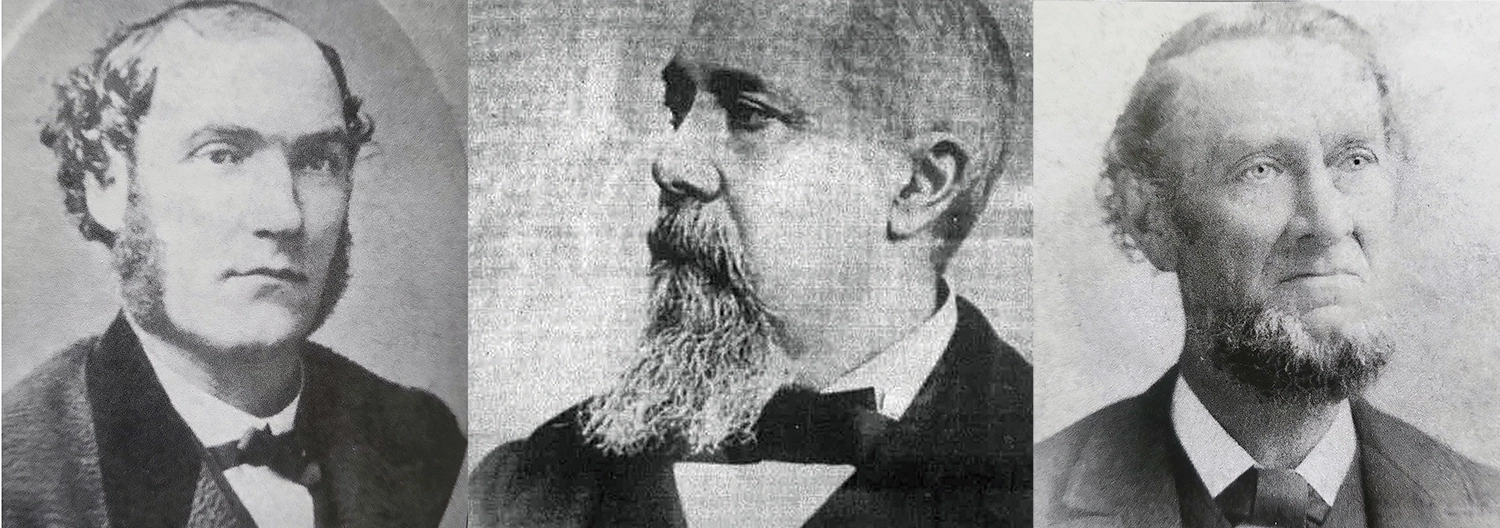
Theodore Smith Rogers (left), Jordan James Cole (Center), and Emerson Otis Stanley (right) were reportedly on the team, but only Stanley has been confirmed by historian Bruce Allardice.
What role did the Plow Boys play in the Civil War?
The Plow Boys were a close group of friends who enlisted together in the Civil War as a company. Walter Blanchard and Theodore Smith Rogers, two early Downers Grove founding figures, were leaders and captains of the company. Jordan James Cole (1833-1901), a Downers Grove merchant, was later captain of the Union Army and mayor of Downers Grove. The Cole House at 710 Maple Ave. is a town landmark today. Theodore Smith Rogers (1831-1917), a prewar farmer and schoolteacher in Downers Grove and the postwar county sheriff, is also recorded as having played.
How did baseball teams evolve from clubs like this?
These social clubs met for other purposes – in this case, politics – but they played baseball to keep in shape. They figured out, however, that it was a lot more fun if you won games! So, clubs started recruiting. If a member knew of a good player, they would offer to pay the club dues to get the guy into the club and, therefore, onto the team. Somehow, players from competing teams would get jobs in particular towns that had good teams. Eventually, clubs started hiring players from other teams who wanted to play for them. Often, they would ask a member of a newspaper staff to play on the team so that the game would get news coverage.
What was their record?
Believe it or not, there are only four documented games we are sure the Plow Boys played: 1858 against the Union Club of Chicago, 1859 against the Club of Danby (Glen Ellyn), 1870 against the Red Stockings of Fullersburg (Hinsdale), and 1870 against Naperville. But that’s not to say they didn’t play more games. Newspapers at the time didn’t report much on sports; it wasn’t seen as newsworthy. It was considered a kids’ activity.
Was their version of baseball the one played today?
Not really. Bat and ball games have been around for centuries. Much longer than the game of baseball we know today. It was more like softball at that point with all underhand pitching. Every town team had different rules. At the start of the game, teams agreed on how many runs they would play to, so if it was 70, games could last for days! Before 1868, shoemakers made baseballs, mostly from cork or rubber. They varied in size. Each team brought their own ball, so if you had a team that wasn’t great at fielding, they probably brought a slower ball. The winning team often took the ball since they weren’t easy to come by. That was the prize.
Eventually, teams began to see uniforms of cotton or wool. No zippers or buttons. Shirts would sometimes have a team name but not the player’s name. After all, if the team was made up of ten local players, spectators would have known everyone who was playing. They wore spikes on everyday shoes.
What effect did the Civil War have on baseball?
The war had a paradoxical effect on baseball. On the one hand, it wiped out a lot of the teams, especially most southern teams. Play was all but suspended during the war. The idea was that if you were young and strong enough to play baseball, you should either be enlisted or work in a factory toward the war effort. On the other hand, the war also increased baseball’s exposure. NY and IL soldiers suddenly played together during their leisure time in the camps, and they learned the NY rules, which largely became the rules that the MLB eventually adopted. After the war, northern and southern teams found a common identity in their love of baseball. So, the game contributed to a sort of reconciliation between the North and South.

Historian Bruce Allardice
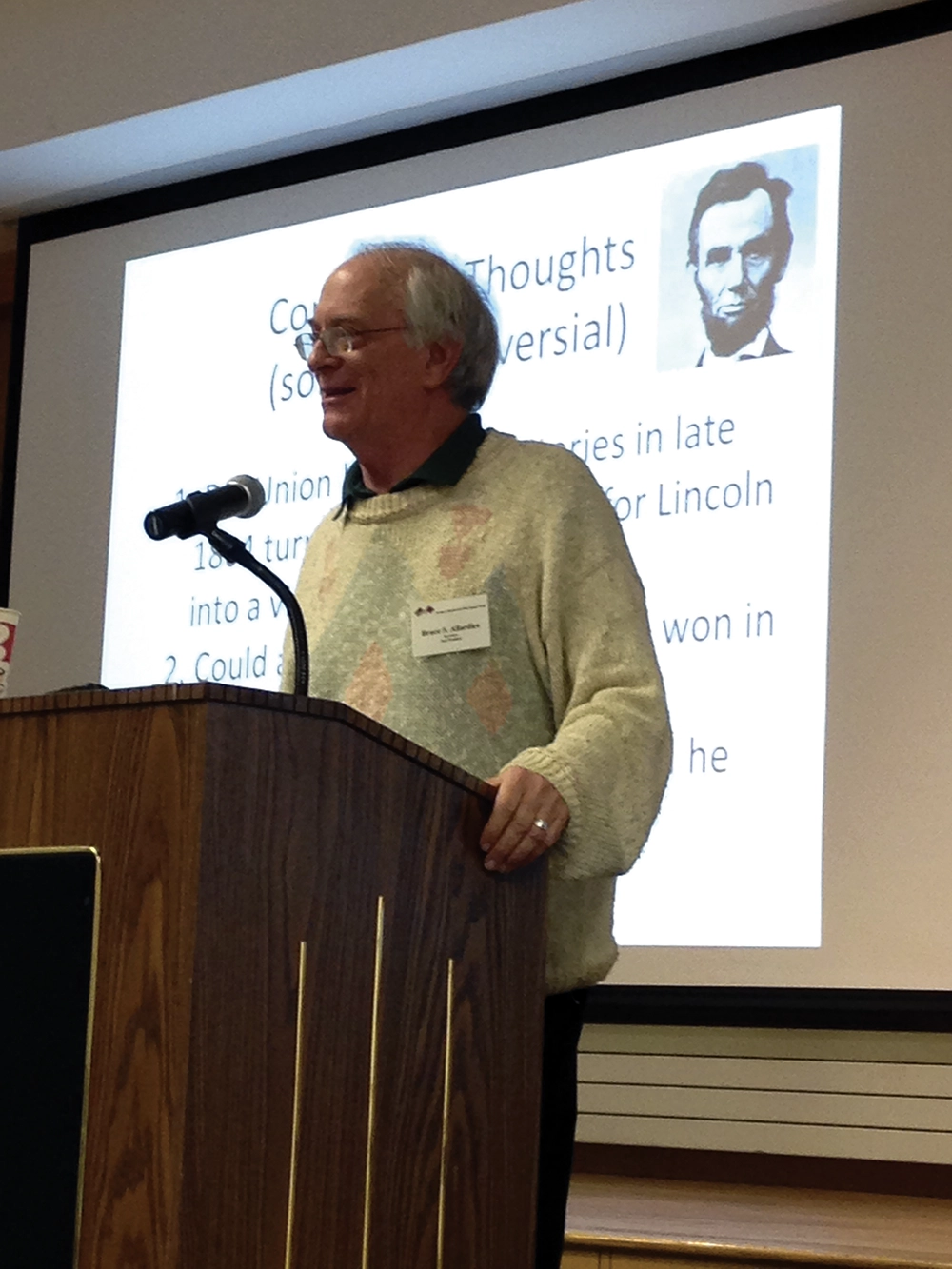 Civil War and sports historian Bruce Allardice is a former South Suburban College professor of history and political science.
He is also a sports historian with a special love for baseball. “I remember my grandfather quizzing me at eight years old on the batting averages of every player in the American League,” Allardice smiled.
He’s a lifelong White Sox fan who has co-authored Scandal on the Southside: The 1919 Chicago White Sox, a book about the Black Sox scandal. He is involved in numerous historical organizations and serves as the Vice President of the Chicago Civil War Roundtable.
For more information or to check out the books Allardice has authored, visit CivilWarBruce.com.