
Reaching New Heights: Bradley and the USA Deaf Volleyball team take to the court
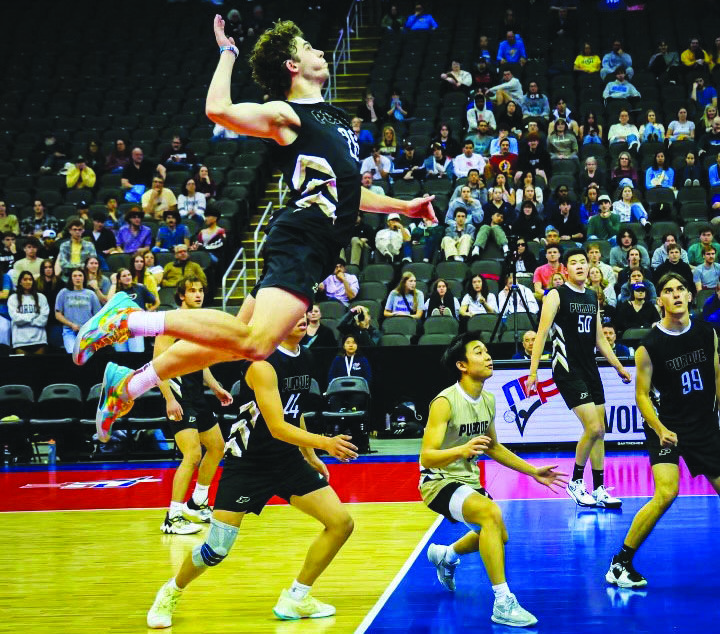
Hinsdale Magazine Group spoke with 21-year-old Cullen Bradley of Hinsdale regarding his journey to the USA Deaf Volleyball (USADVB) national team. Bradley, who lost his hearing around two to three years old and received cochlear implants shortly after, is a rising senior at Purdue University, where he is studying computer engineering and plays for the club volleyball team.
HMG: According to Jamie Davis, CEO of USA Volleyball, the number of boys in high school volleyball has increased by 40% since 2017, making it the fastest-growing high school sport in the country. How did your volleyball career begin?
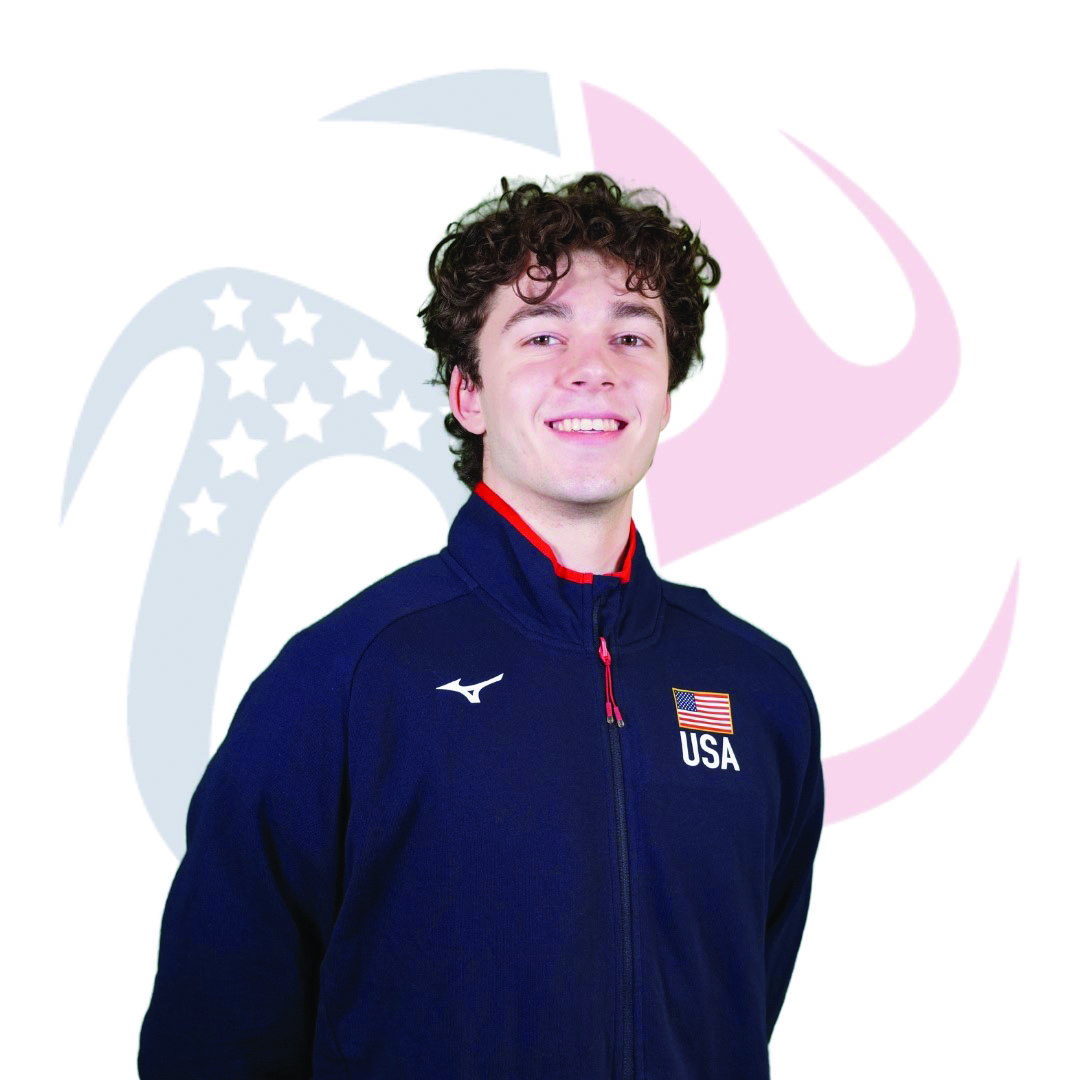
Cullen Bradley
Cullen Bradley: My volleyball career began at the end of my basketball career. I was cut from the Clarendon Hills Middle School 7th grade basketball team, which prompted me to try out for the volleyball team. However, I never made the volleyball team in school. That did not stop me. I transitioned to club volleyball, where I began to make serious improvements and found a passion for the sport. I was at a few clubs before landing at Serve City – now 630 Volleyball – where I spent most of my high school volleyball career. My 630 team finished second at nationals in my senior year when we lost to a very tough California club.
HMG: Last summer, you tried out for the USADVB Indoor National Team in Asheville, North Carolina. What prompted you to try out for the team and tell us about your path?
CB: In my freshman year of college, my volleyball club team at Purdue played in a volleyball tournament at Illinois State. I ran into Adam Radomski whose son, Chris Radomski, is also deaf. Coincidentally, both Chris and I attended Child’s Voice, an organization that offers kids listening and spoken language education while growing up. Fast forward a few years to when Mr. Radomski remembered me and told me about the tryout opportunity. I tried out alongside Chris, and we both made the team. I’m so thankful that Mr. Radomski reached out because this opportunity wouldn’t have been possible without him.
HMG: You are a student in computer engineering through the Honors College at Purdue University and a member of the Purdue Men’s Club Volleyball team. How do you balance that with being a member of the USADVB National Team?
CB: While USA Deaf Volleyball doesn’t meet routinely throughout the school year, I do my best to make sure that I’m in the best shape I can be for the team when it comes time to play. That means I try to play as much volleyball as I can. However, balancing school with volleyball is admittedly a lot. Beyond late-night practices and tournaments for my club team, I practice with the women’s team one to three times a week, depending on my class schedule. It all comes down to time management.
HMG: Your team will play in the 5th World Deaf Volleyball Championship in June in Okinawa, Japan. How does the team prepare for competition at that level?
CB: Because we only have a little time together, a large percentage of the preparation is individual. Everyone is expected to play high-level volleyball independently and stay in shape. Some guys play professionally overseas or at varying levels in college, so they have their own regimens. However, we played together for the first time in the US Open as a team. The tournament’s goal was to figure out and develop team synergy, and we smashed that goal. We ended up finishing 9th overall in the highest division of that tournament and only lost to other top 10 teams. We will also have a training camp in California before the Championships, where we’ll spend a couple of days practicing together. However, one of the biggest barriers for a deaf team is communication. Even though we’re a deaf team, only slightly more than half of us know sign language, and unfortunately, I am not one of them. However, I’ve been practicing, and I’m excited to show my team how much I’ve progressed. Deaf culture is something that I’m very excited to become a deeper part of, and this team will help me to that end!
HMG: Volleyball has been a sport in the Deaflympics since 1969, and the USA has sent a team ever since. Walk us through what needs to happen to compete in the Deaflympics in Tokyo, Japan, in November 2025.
CB: Our team is playing this summer in the Deaf World Championships in Okinawa, Japan, along with seven other teams. If we can claim a top-three finish at this tournament, we will get an invitation to the Deaflympics. If our team doesn’t get an invite this summer, there is another opportunity at the upcoming Pan Am Games in Canoas, Brazil, this November. If we claim a top-three finish at that tournament, we’ll also get a bid. If we don’t manage to finish favorably in either tournament, it’s still possible to get an at-large bid from the deaf volleyball governing body, but that’s not something we can count on. Our goal is to put our best foot forward and do everything we can to guarantee an invite!
HMG: How does representing your country on that national stage feel?
CB: I’ve always loved watching Team USA play and dreamed of playing for that team. Watching incredible players like TJ Defalco and Micah Christensen is something I’ve done for years, and being able to be a part of Deaf team USA feels incredible. It’s a dream that I’ve been striving for ever since I began playing the sport. I’m so proud and humbled to have the opportunity to represent both the United States as well as the deaf community, which is such a huge part of my identity.
HMG: Volleyball is a communication-driven sport. What strategies does your team use to create such high-level combination plays?
CB: Since verbal cues are off the table, we’ve had to get creative. Oftentimes, guys on the team will be very dramatic by waving their arms to call for the ball, and they may even push others out of the way to make sure whatever needs to happen happens. Since positions in volleyball have very distinct boundaries from one another, oftentimes, we have a designated player who should be taking the ball, like our setter or our libero. Another strategy we use to communicate is setter hand signs. The setter will tell us where he wants us to hit/spike on the net, and we listen. We must be more coordinated in between points than other teams because we don’t have the luxury to communicate with our mouths as we play, but it’s a system we’ve worked on in depth, and it’s worked well so far!
HMG: Outside of volleyball, what are your other interests or hobbies?
CB: I’m a very active person. I enjoy lifting weights in my free time, as well as casually shooting baskets. I enjoy being outside and going on hikes, especially on mountainous trails with beautiful views. I’m also a big gamer, and I love to play Rocket League and Apex Legends with my friends. Ironically enough, despite being deaf, I love listening to music. It’s something that I didn’t get into until probably later in middle school, but it’s something that I love now. My cochlear implants even have Bluetooth, which is just so convenient to listen to. Finally, I have one younger sister, Leah, who is entering her sophomore year at the University of Wisconsin-Madison. We’ve always been very close, and we both have a sweet tooth, so we get a lot of desserts together!
Although the U.S. Olympic Committee supports efforts in spirit, they cannot offer the USA Deaf Volleyball any financial support. To support Bradley and other athletes on their upcoming travels, visit usadeafvolleyball.com to make a donation. ■
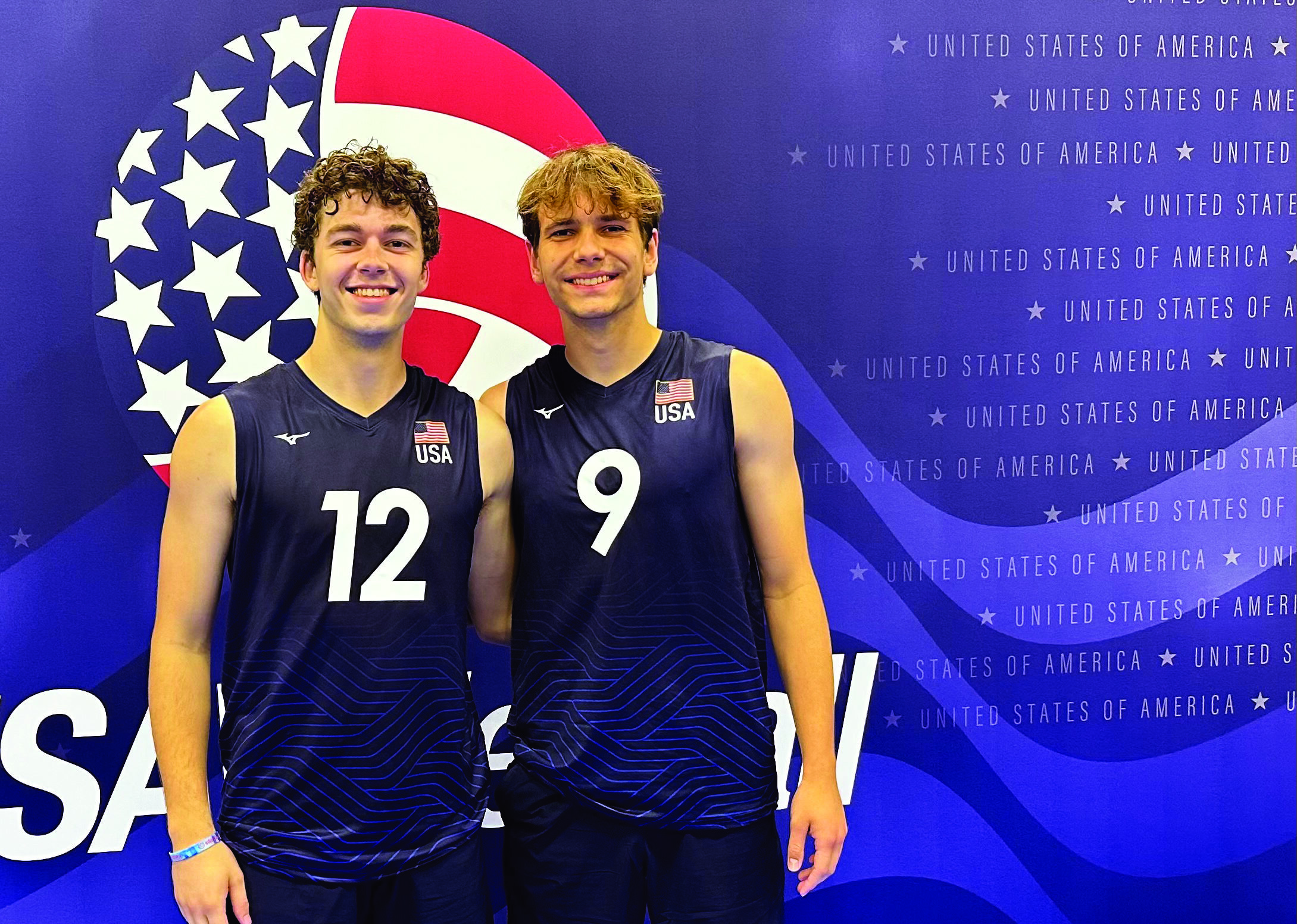
Bradley with teammate Chris Radomski