
Type 1 Diabetes
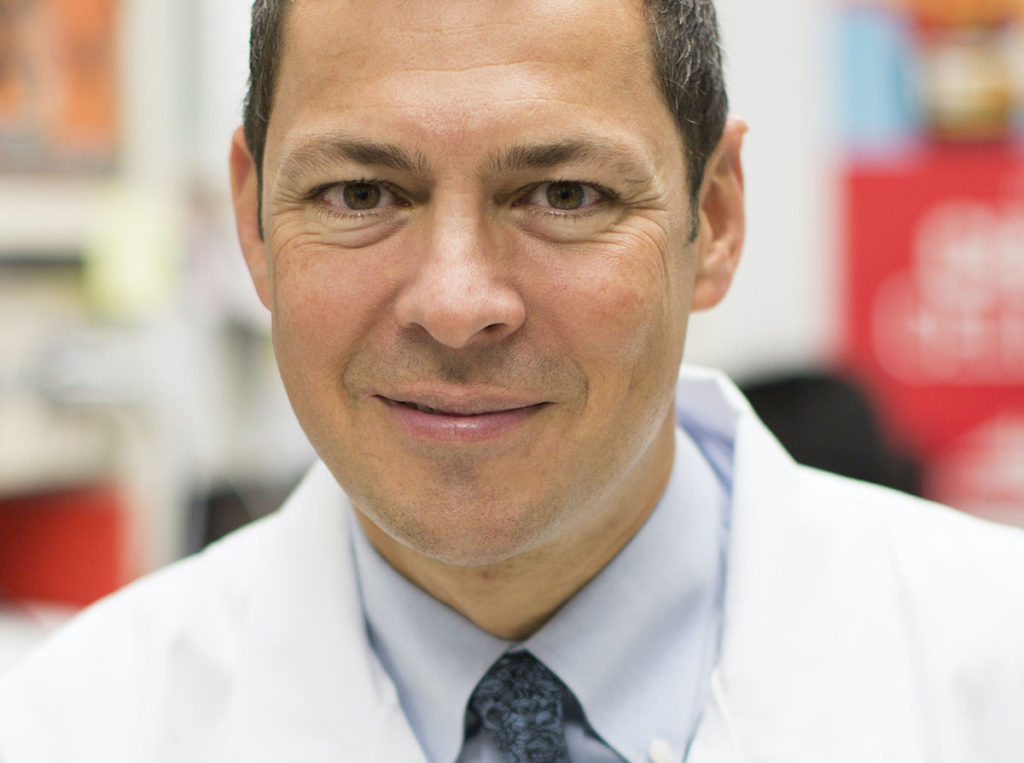
Researcher & Surgeon Dr. Jose Oberholzer
By Larry Atseff
In our discussions with Dick Portillo and the success of his restaurant chain, we learned how important it was for Sharon, his childhood sweetheart and wife of 62 years, to be constantly by his side. We also learned that in 1997, it was discovered that she had Type 1 diabetes. In the course of treatment, they have learned the following:
1 Chicago is a leading center for the treatment of Type 1 and Type 2 diabetes.
2 At the forefront in treating Type 1 diabetes is Doctor Jose Oberholzer.
3 The group he founded, the Chicago Diabetes Project, is an international research collaboration that is focused on “islet transplantation”, a promising technique in dealing with Type 1.
4 In fact, islet transplantation has been effective in treating Sharon. As a result, Dick has helped fund Dr. Oberholzer’s efforts, and wants more people to know about Oberholzer’s important work.
How Type 1 and Type 2 Diabetes differ
Of 26.8 million Americans diagnosed with diabetes, about 1.6 million have Type 1. Types 1 and 2 both cause high blood sugar and have insulin as the problem. Insulin is a hormone that unlocks cells to let in blood sugar, and that creates energy. You can’t live without insulin. If you have Type 2, your body makes insulin, but can’t use it properly. If you have Type 1, your body doesn’t make enough of it. The pancreas stops making it, as the body’s immune system mistakenly attacks healthy cells in the pancreas. Without insulin, sugar builds up in the blood and can damage your internal organs, including your heart, kidneys, eyes, nervous system, and other parts of the body. Obviously, these conditions can become life-threatening. Type 1 is extremely challenging, because, to this day, doctors are still not sure why the body doesn’t make enough insulin. While much of the medical community continues to try and determine the cause, techniques on controlling the disease with regular insulin injections or use of an insulin pump have become the prevalent treatments for Type 1.
The Chicago Diabetes Project and Dr. Oberholzer have put their focus on “islet transplantation” as a way to go further, and actually reverse Type 1 and enable the body to produce insulin naturally. Certain islet transplantation trials are showing that this approach is able to produce insulin naturally so well, some patients are actually living insulin-free. Islets are clusters of cells found in the pancreas that work together to regulate blood sugar. In an islet transplant, doctors take healthy islets from the pancreas of an organ donor, and inject them into someone with Type 1 diabetes. Now that islet transplantation is shown to work, scientists are looking for ways to make the technique more widely available, and at lower costs. In one approach, scientists focus on the transplant site. While the liver is the traditional site for islet transplantation, this location is not ideal. Other sites and options are being looked at. For example, researchers are looking at a bio-engineered platform that works like an artificial pancreas. Scientists are also looking for ways to sustain the islets’ long-term survival and protecting them from the autoimmune attacks that caused Type 1 diabetes in the first place.
Options include creating barriers to protect the cells, or even adding oxygen to transplant sites. Researchers are even investigating how to increase the supply of islets available for transplant, enabling the body to recreate a patient’s own pancreatic cells, so cells don’t have to be taken from a donor. This includes the use of lab created embryonic stem cells that, in turn, become islets for transplanting to a Type 1 diabetic. Dr. Oberholzer and his associates are constantly looking at other ways to make islet transplantation more effective and widespread.
For more information, go to chicagodiabetesproject.org