
Visit Normandy
A calm escape from the hustle and bustle of Paris
By Maureen Callahan
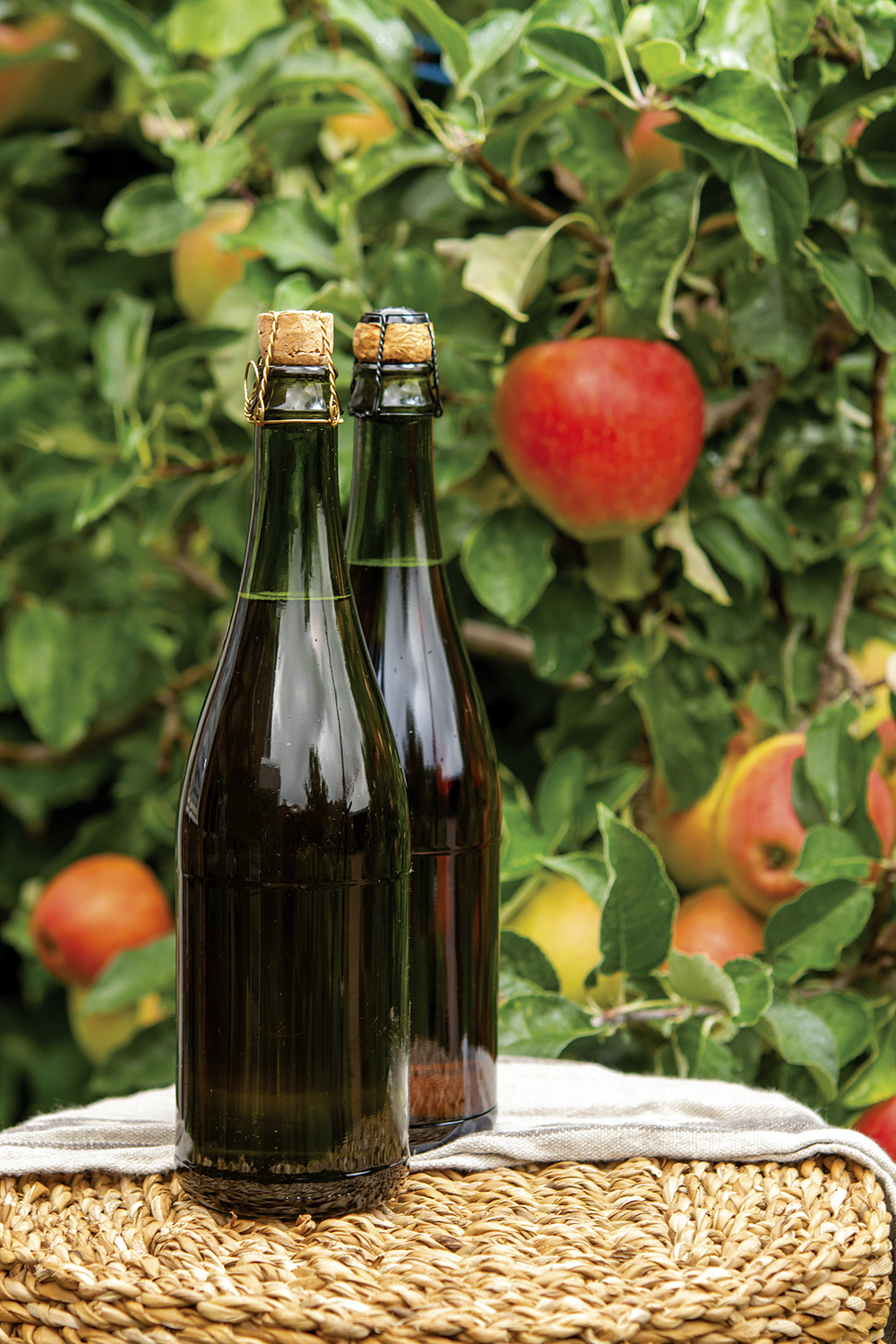
Hard cider (cidre dur) is hand crafted at numerous family-owned orchards.
In the wake of this summer’s 80th anniversary of D-Day, it’s all eyes on Normandy. And while history is around every corner here, this gem of a region is known for more than its museums and memorials. It is one of France’s most enchanting corners and the perfect escape to come down a notch after your whirlwind Parisian sojourn.
Miles of rugged, windswept peninsulas along the English Channel give way to gaslit, cobblestoned streets within walled cities. Artisans carry on their trades in small village squares as they did centuries ago. Lilliput-like islands beckon visitors to discover ancient ruins in fields of wildflowers. This is the area Monet brought to light through Impressionism.
Apple and pear orchards, thatched farmhouses, and ruins of centuries-old stone churches dot the landscape of this area, equally accessible by bike or car. Nearly 400 miles of coastline ensure some of Europe’s freshest seafood. So relax with a glass of dry cider, the regional specialty. You may never want to leave.
Normandy American Cemetery
On D-Day, Nazi occupied France was invaded by British, American, Commonwealth and Canadian troops. The result was the beginning of the end of World War II. This world’s most-visited war cemetery is the resting place of more than 9,000 American soldiers. Row after row of immaculate marble crosses dot meticulously kept green laws. The Spirit of the American Youth sculpture, surrounded by a moving memorial, silently tells the story of those who perished on the beaches below.

More than 9,000 American soldiers are buried in this cemetery overlooking Omaha Beach.
D-Day Museums
There are ten different area museums related to the epic Allied invasion of Normandy, codenamed Operation Overlord. Two of them tell the story of this historic moment from the Canadian and British point of view. These are good places to get a grasp of the enormity of the event.
Le Mont St Michel
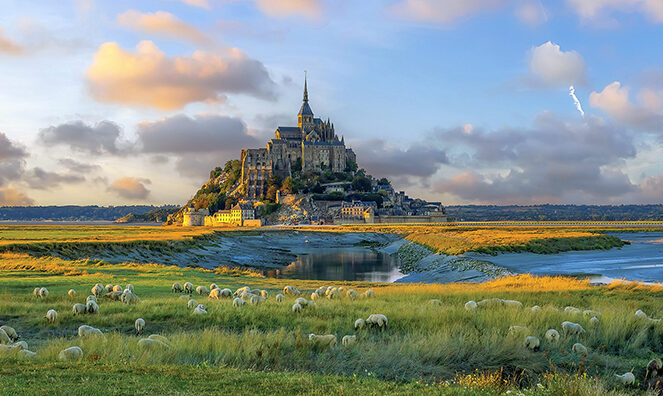
This rock-like fortress crowned by an architecturally magnificent abbey is a tidal island surrounded by quicksand. This UNESCO World Heritage Site is in a bay about one kilometer off the Norman coastline. For a millennium, pilgrims have flocked to Le Mont St Michel to see some of the highest tides in Europe rush 9 miles in from the sea. A cone-shaped route, starting at the base of the structure, forms a medieval tangle of cobblestone paths that culminate in a working abbey at the top.
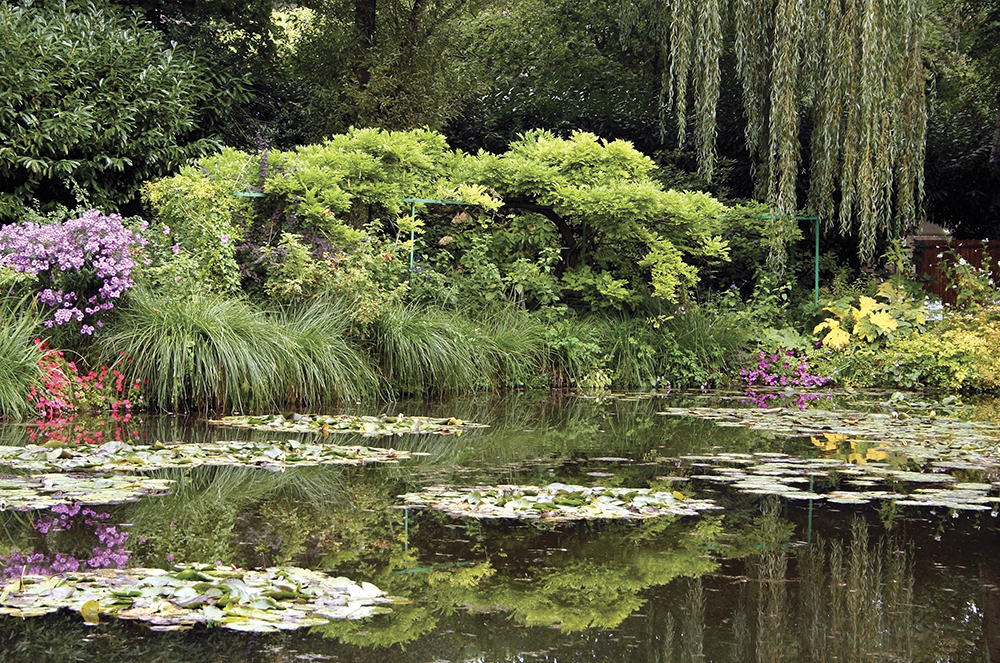
Monet’s gardens in Giverny were the inspiration for his Water Lilies series.
Monet’s Home & Garden, Giverny
As a child, Claude Monet was encouraged to paint en plein air (outdoors). Fascinated by the illusionary effects of sunlight and weather, he constantly worked against the constraints of changing light on his subjects. The colors of his carefully planned garden provided him with an ever-changing palette. Here he painted the Water Lilies series – his best-known work.
Bayeux
This small-scale town is full of charm and known the world over for the Bayeux Tapestry. It’s a 224- foot embroidered narrative of the Norman Conquest – the military triumph over England by William, Duke of Normandy, which culminated in the Battle of Hastings.
The Cider Route
Dry cider is to Normandy as wine is to Bordeaux. Each orchard makes a house variation. The signposted Route du Cidre links cider-making villages by way of scenic backroads. The route also passes about 20 local producers of the drink who offer tours of their cellars and tastings. Look for signs marked “Cru de Cambremer.” ■
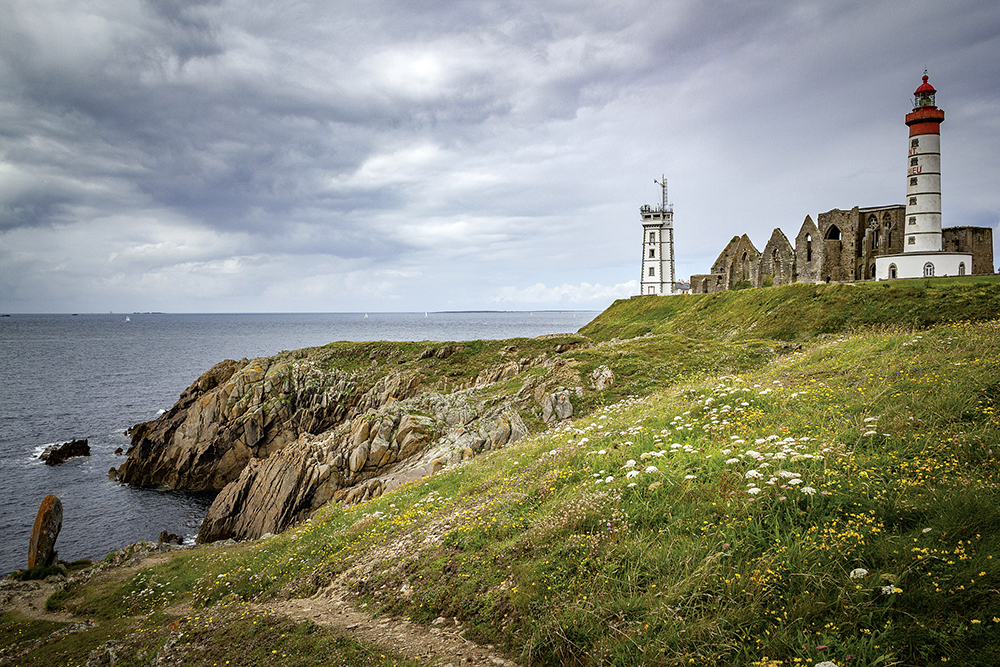
Normandy has some of Europe’s most rugged scenery.
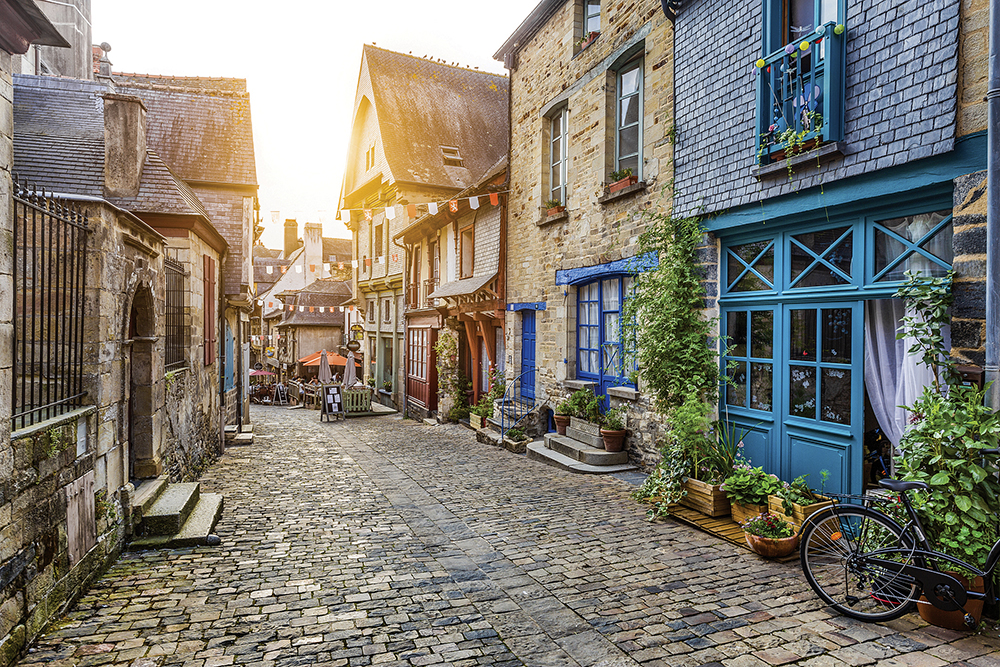
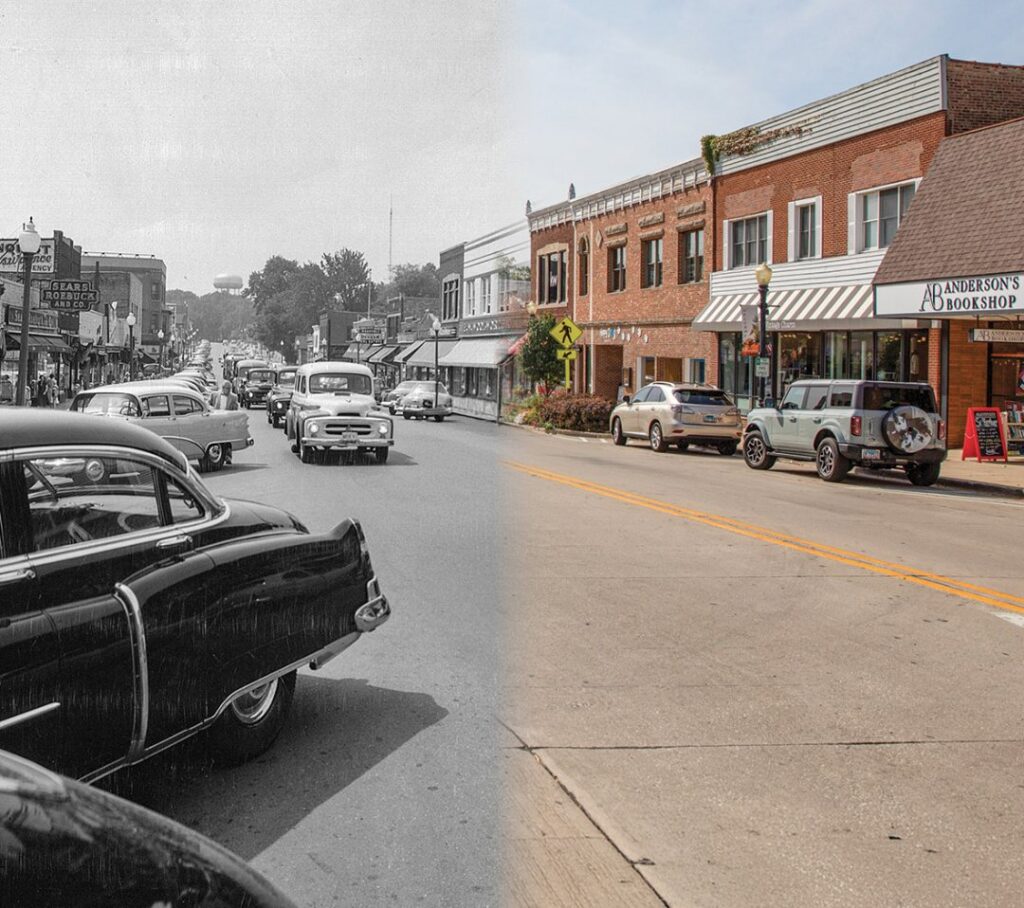
Charming villages are full of architectural and maritime history.